

Severe flooding across New Jersey in July sent water into businesses, commercial properties, highways, and at least one hospital. As detailed in this Associated Press report on the July flooding, the widespread disruption was an immediate reminder that flood exposure is not only a drainage or cleanup problem. It can also reveal weaknesses in the concrete structures that support and protect commercial facilities.
For parking garages, loading areas, ramps, foundations, and elevated concrete decks, the effects of flooding may continue long after the visible water is gone.
What Floodwater Can Do to Concrete Structures
Concrete is durable, but it is not completely impermeable. Water can enter through cracks, deteriorated joints, porous surfaces, failed coatings, and damaged transitions.
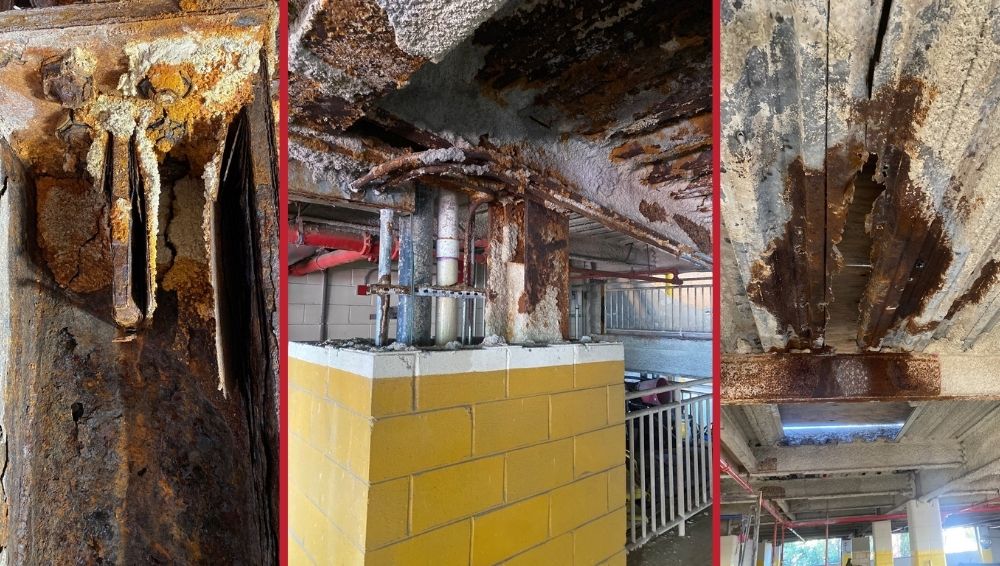
Once moisture reaches reinforcing steel, corrosion can begin or accelerate. As steel corrodes, it expands, placing pressure on the surrounding concrete. Over time, that process can contribute to cracking, delamination, spalling, and sections of concrete breaking away.
Flood exposure can also affect traffic and waterproofing coatings, expansion and control joints, concrete patches from earlier repairs, metal decking beneath structural slabs, drainage systems, penetrations, and masonry transitions.
Visible damage is only one part of the assessment. Staining or a failed coating may point to a larger water-infiltration path. A small area of spalling may indicate broader reinforcement corrosion below the surface.
This is where specialized investigation matters. An experienced concrete restoration team can evaluate how the concrete, reinforcement, joints, drainage, waterproofing, and protective finishes work together instead of treating each defect as an isolated repair.
Delaying Repairs Can Increase the Scope
After a major storm, building owners naturally focus on removing water, reopening affected areas, and addressing urgent safety concerns. Less obvious deterioration can be pushed into a later maintenance cycle.
That delay can become expensive.
Water may continue moving through failed joints or cracks every time it rains. Exposed or moisture-affected reinforcement can keep corroding. Damaged coatings may stop protecting the deck beneath them. Areas that initially required localized patching can eventually require deeper removal, reinforcement replacement, or metal deck reconstruction.
A structured assessment helps separate immediate hazards from developing deterioration and routine maintenance needs. It also gives owners a clearer basis for budgeting and phasing repairs around an occupied facility.
Storm Damage Shows Why Restoration Requires More Than Cleanup
A recent Construction Dive report detailed $1.86 billion in federal emergency funding for roads, bridges, and other infrastructure damaged by storms and natural disasters. More than $900 million was directed toward Hurricane Helene recovery, with the remaining funds supporting storm-damage repairs across the country.
The scale of that response reinforces an important point for New Jersey property owners. Water-related damage does not end when a garage, deck, ramp, or commercial facility dries out and reopens.
Floodwater can expose existing cracks, failed joints, deteriorated coatings, drainage problems, and compromised reinforcement. In some cases, the most serious damage remains below the surface until concrete begins to delaminate, spall, or break apart.
That makes a complete assessment critical. A specialized restoration team can trace how water moved through the structure, identify damaged concrete and reinforcement, and determine whether joints, metal decking, waterproofing, or protective coatings also need attention.
T.G. Basile brings those capabilities together within one coordinated restoration process. Surveying, concrete removal, reinforcement repairs, deck replacement, waterproofing, coatings, and phased execution can be planned around the structure’s actual condition and the needs of an operating facility.
Not every storm-exposed structure requires extensive reconstruction. The priority is identifying what was damaged, what remains vulnerable, and what work is needed to restore long-term performance.
Concrete Restoration and Waterproofing in Fort Lee
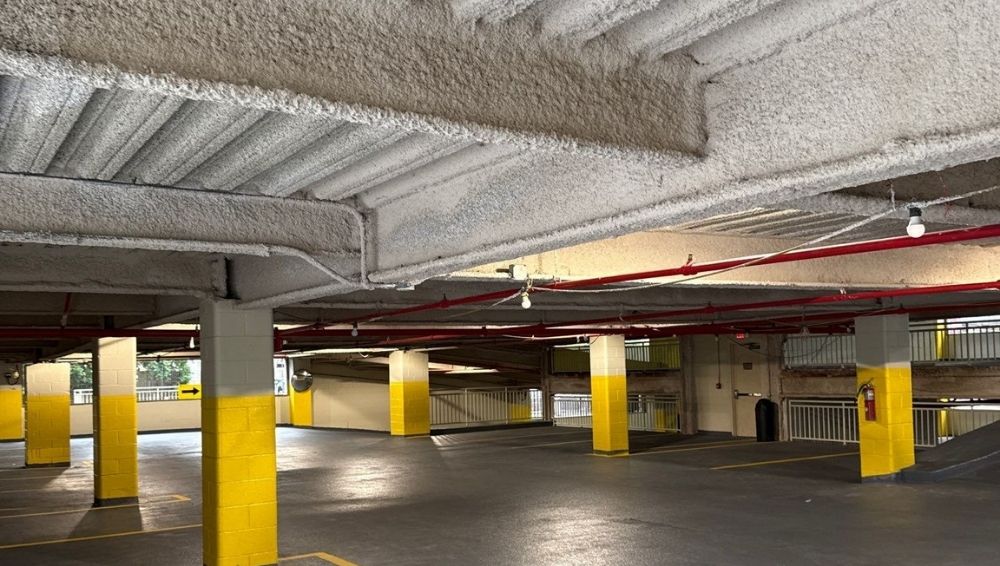
A phased parking garage project at CareOne in Fort Lee, New Jersey, demonstrates what a complete restoration process can involve.
The garage showed widespread spalling, scaling, cracking, fractured concrete, and areas actively breaking apart. T.G. Basile began by surveying the deck and using chain dragging to locate delaminated concrete that was no longer soundly bonded.
Damaged areas were marked, saw-cut, and removed, generally to a depth of approximately four inches. Where deterioration had compromised the supporting metal deck, the existing material was removed and replaced with galvanized metal decking. New rebar and wire mesh were then installed before concrete placement.
The work was completed one floor and one ramp at a time. This phased approach allowed the roughly 30,000-square-foot garage to remain controlled and manageable while repairs progressed throughout the structure.
After the replacement concrete cured, the team installed a three-coat waterproofing system consisting of a base coat, intermediate coat, and top coat. The concrete coating system helps reduce future water intrusion and protects the restored concrete from continued exposure.
Watch Site Superintendent Peter Decker explain the Fort Lee restoration and waterproofing process.
The project shows why durable restoration requires more than covering cracks or replacing visibly damaged concrete. Investigation, demolition, deck replacement, reinforcement, concrete placement, curing, and waterproofing must function as one coordinated system.
Treat Flooding as a Reason to Reassess
Not every structure exposed to flooding will require extensive restoration. However, severe water exposure should prompt owners to review known problem areas and determine whether cracks, joints, coatings, drainage components, or previous repairs were compromised.
The most cost-effective time to define the problem is before deterioration spreads and before work begins under emergency conditions.
For complex concrete structures, a specialized team can help translate visible conditions into an executable plan. That includes identifying the cause of the damage, establishing repair priorities, coordinating materials, sequencing the work around building operations, and installing the protective systems needed to extend the structure’s service life.
As New Jersey properties recover from July’s flooding, concrete structural health should remain part of the conversation. Water cleanup may take days. The consequences of overlooked concrete deterioration can last much longer.
Schedule a Concrete Assessment
If your property experienced flooding or you have concerns about the condition of your concrete structures, now is the time to take a closer look. Early evaluation can help identify hidden damage, prevent further deterioration, and provide a clear path forward for repairs.
T.G. Basile specializes in concrete restoration, waterproofing, and structural repairs for commercial and institutional properties throughout New Jersey. Our team can assess your structure, define the scope of work, and develop a phased plan that aligns with your operational needs and budget.
Contact us today to schedule an inspection or discuss your project with our team.