



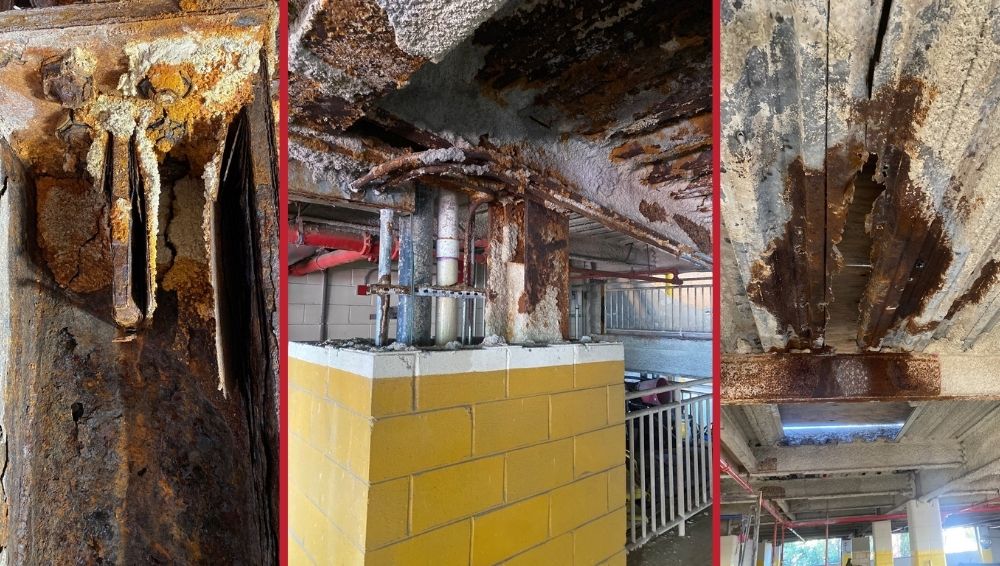
In the structural asset management ecosystem, regulations often lag behind reality. Usually, it takes a catastrophe to shift the legislative needle. But recently, we have seen a pivotal shift in New Jersey that suggests the era of “wait and see” maintenance is officially over.
The Borough of Fort Lee has taken a decisive step with the adoption of Ordinance No. 2025-17, effectively mandating rigorous structural inspections for parking garages. While this ordinance is specific to Fort Lee, it signals a broader, statewide trend toward stricter oversight of aging infrastructure.
For commercial property owners, facility managers, and condo associations, this isn’t just another compliance hoop to jump through. It is a fundamental change in how we must manage the lifecycle of concrete assets.
The Specifics: What Ordinance 2025-17 Requires
The new ordinance is clear and uncompromising. It mandates that the owner of any parking garage in the Borough that is five years or older must undergo a comprehensive condition assessment. The timeline is aggressive: initial inspections must be completed by December 31, 2026.
This is not a cursory walkthrough. The ordinance requires that these inspections be performed by a New Jersey licensed Professional Engineer (PE). The resulting report must classify the structure into one of three distinct categories:
- Safe: The structure requires no immediate action.
- Safe with Repairs and/or Engineering Monitoring (SREM): The structure is currently safe but has defects that require remediation within a specific timeframe to prevent them from becoming critical.
- Unsafe: The structure poses an immediate danger and must be taken out of service until emergency stabilization is performed.
The inclusion of the “SREM” category is particularly significant. It eliminates the grey area where property owners often defer maintenance. If an engineer flags a spalled beam or a corroding expansion joint as “Safe with Repairs,” the clock starts ticking. You are now legally on notice to fix it.
Why Now? The Science of Deterioration
Why is Fort Lee, and likely many other municipalities to follow, taking such a hard line? The answer lies in the physics of concrete in the Northeast.
Parking garages are unique structures. Unlike an enclosed apartment building, a garage is exposed to the elements on all sides. It endures the brutal freeze-thaw cycles of New Jersey winters, where moisture penetrates the concrete pores, freezes, expands, and creates micro-cracks. Add to this the aggressive use of de-icing salts, and you have the perfect recipe for chloride-induced corrosion.
Once salt water reaches the embedded reinforcing steel (rebar), it begins to rust. As steel rusts, it expands up to seven times its original volume. This internal pressure (tensile stress) exceeds the strength of the concrete, causing it to delaminate and spall. By the time you see a chunk of concrete fall to the floor, the structural damage inside the slab is often far more extensive.
Regulations like Ordinance 2025-17 are designed to catch these issues during the “incubation period” before the rebar has completely rusted through and before the load-bearing capacity of the deck is compromised.
The “Ripple Effect” and the Q4 Crunch
If your property is located outside of Fort Lee, do not make the mistake of thinking this doesn’t apply to you. In the wake of high-profile structural failures across the country, municipal insurers and town councils are risk-averse. We anticipate a ripple effect where neighboring municipalities will adopt similar “reciprocal” ordinances throughout 2026 and 2027.
Furthermore, there is a logistical reality to consider: The Q4 Crunch.
There are a finite number of qualified, licensed structural engineers in New Jersey capable of performing these specialized inspections. As the December 31, 2026, deadline approaches, the demand for these professionals will skyrocket. Owners who wait until October to schedule their inspection will likely face premium pricing or, worse, find that no engineers are available, leaving them exposed to significant fines and legal liability.
Moving From Reactive to Proactive
The most successful property owners view these regulations not as a burden, but as a baseline for asset preservation. A “reactive” maintenance strategy (fixing things only when they break) is statistically the most expensive way to manage a garage. Emergency shoring, unplanned mobilization, and urgent structural repairs typically cost more than planned preventative maintenance.
By complying with this ordinance early, you gain the ability to budget for repairs over a multi-year cycle rather than facing a surprise six-figure assessment.
How T.G. Basile Can Help
At T.G. Basile, we have spent over 50 years specializing in the restoration of concrete and masonry structures. We understand that an inspection report is only the first step. The real challenge is executing the necessary repairs efficiently, safely, and correctly.
We bridge the gap between the engineering report and the physical solution. Whether your assessment calls for full-depth structural repairs, overhead concrete patching, carbon fiber (CFRP) strengthening, or the replacement of failed expansion joints, our teams are ACI-certified and equipped to handle the scope.
We don’t just patch holes; we restore structural integrity. We understand the specific requirements of the new codes and work seamlessly with licensed engineers to ensure your facility is not just compliant, but truly safe for the long haul.
Don’t wait for the deadline. If you own a parking structure in Fort Lee or the surrounding area, the time to act is now. Contact T.G. Basile today to discuss your structural maintenance plan and ensure your asset stands strong for decades to come.