



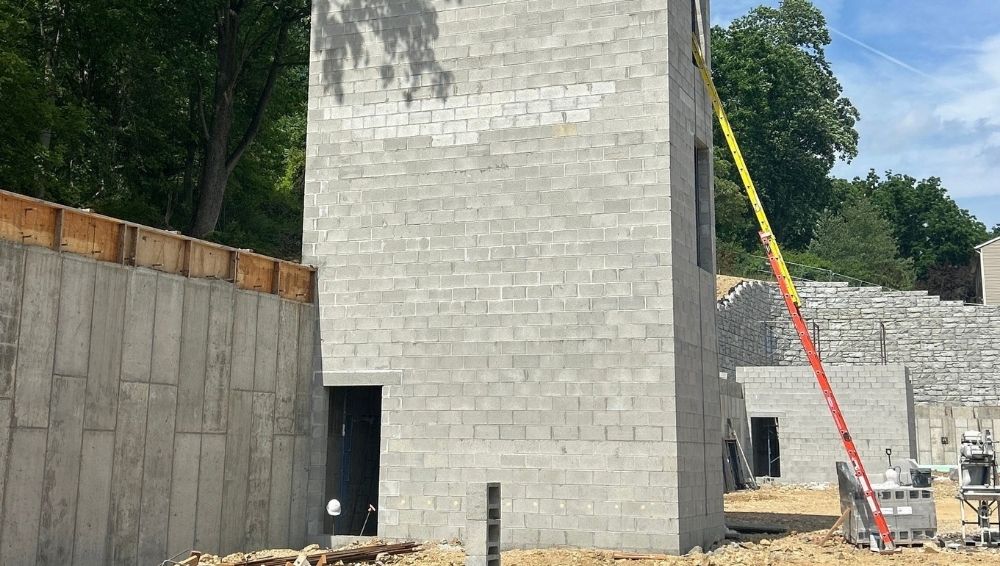
Across the United States, the construction labor shortage is no longer a forecast. It is a daily reality on job sites. Schedules slip, costs rise, and the most complex scopes often absorb the most risk.
A recent Q4 2025 market conditions report, which includes data from the Associated General Contractors of America, puts numbers behind what many owners already see. According to that report, 88 percent of firms hiring craft workers reported open positions, and 45 percent reported project delays tied directly to worker shortages. You can read the report here.
For structural concrete, parking garage restoration, and façade restoration, this is more than a staffing problem. The construction labor shortage has become a core risk factor for quality, safety, and long term performance.
The Role of a Self Performing, Technically Strong Partner
Owners and construction managers cannot solve the national construction labor shortage on their own. What they can do is control the quality of the partners they rely on for the most critical scopes.
A self performing contractor with experienced crews offers several advantages in this environment:
1. Stable core teams for high risk work
When key scopes are handled by in house crews, the contractor can maintain training, culture, and standards. Structural concrete, garage repair, and façade work are not handed off to the lowest available subcontractor.
2. Field leadership that understands structural intent
Foremen and superintendents who have worked on complex structures for years bring an intuitive understanding of how design, sequencing, and site conditions interact. That leadership is the bridge between drawings and reality.
3. Repeatable processes under pressure
In a tight labor market, schedule pressure does not go away. Crews that follow defined procedures for layout, reinforcement, surface preparation, curing, and safety help prevent improvisation from becoming the default.
4. Better use of limited specialized labor
When a contractor controls its own workforce, it can assign its most skilled tradespeople to the tasks where they add the most value, instead of spreading them thin or supplementing with unfamiliar labor at the last minute.
For owners, this means the construction labor shortage is still a challenge, but it is a managed challenge, not an unmanaged one.
Collaboration Starts Earlier Now
One shift the industry is already seeing is earlier involvement of specialty contractors in planning. On structurally complex projects, it is no longer enough to bring a concrete or restoration partner in just before mobilization.
Involving a self performing structural contractor earlier allows teams to:
- Review schedules and identify labor intensive milestones that need realistic durations
- Sequence structural pours, restoration phases, and façade work around available crews
- Align engineering details with what is buildable under current labor constraints
- Plan access, phasing, and occupied building work so operations are maintained safely
This is not about lowering expectations. It is about aligning design intent, labor realities, and field execution so the structure still meets its long term performance goals.
How a Partner Like T.G. Basile Helps Address the Construction Labor Shortage
T.G. Basile has operated through multiple market cycles, including periods of both rapid growth and tight labor conditions. Our experience has reinforced a simple principle. When skilled labor is scarce, the quality of your structural partner becomes more important, not less.
For owners and project teams, working with T.G. Basile means:
- Self performing crews who focus on structural concrete, parking garage restoration, and façade work every day
- Long tenured field leadership that maintains standards even as the broader market changes
- Close collaboration with engineers so complex details are executed correctly on site
- A consistent, accountable team from preconstruction through completion
The construction labor shortage is a real and ongoing challenge, but it does not have to dictate the quality or reliability of your structures. With the right partner, it becomes a constraint that is planned for and managed, rather than a problem that surfaces only when it is too late.
If you are planning structural concrete or restoration work and want to understand how labor conditions may affect your schedule and scope, our team is ready to talk through practical strategies for keeping your project on track. Contact us today to learn more about how we can assist you.